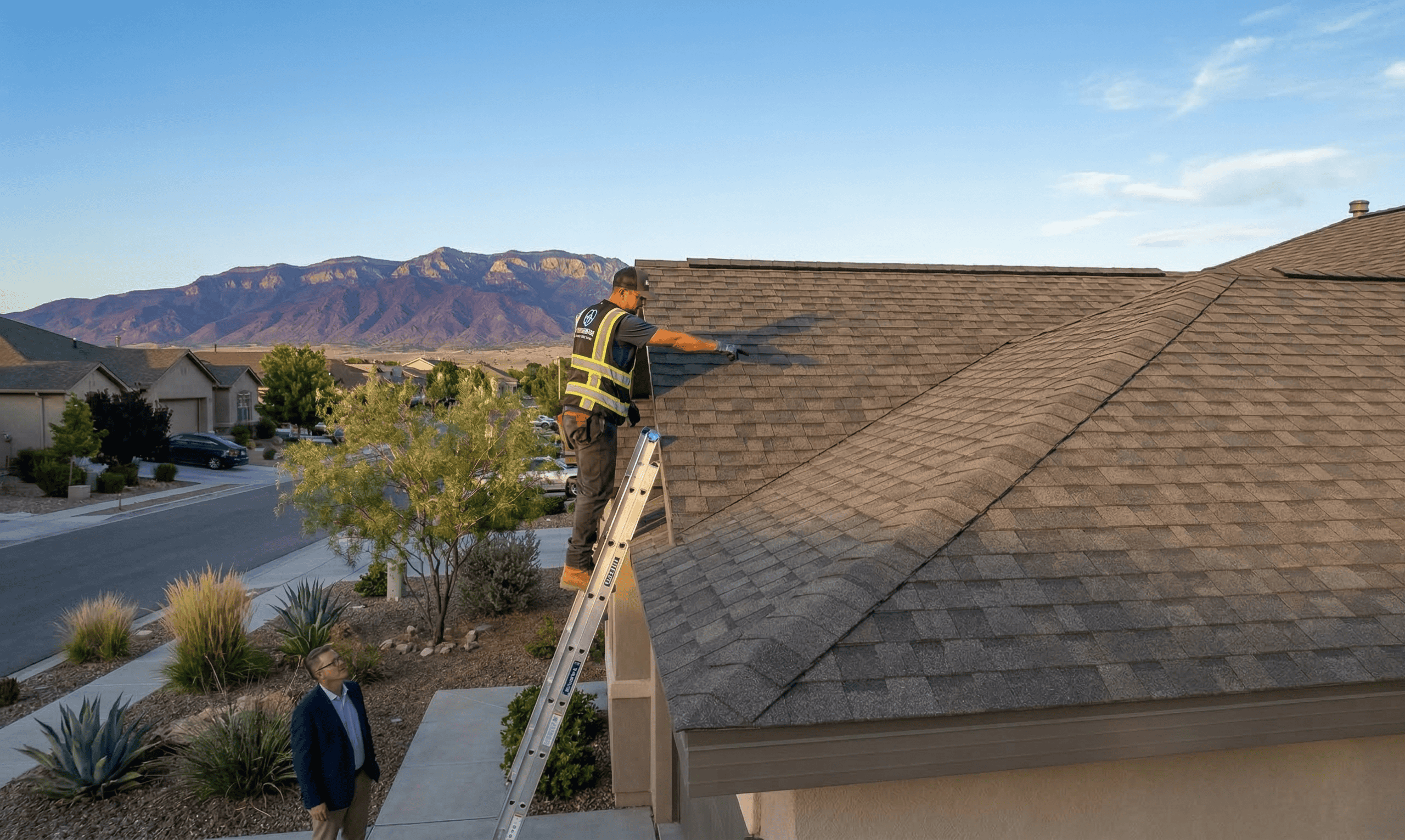
If you’ve ever gone into your attic during a hot summer day and felt a wall of heat, you’ve experienced the importance of roof ventilation firsthand. But is a hot attic just a minor inconvenience, or is it a sign of a much bigger problem?
Proper roof ventilation is one of the most misunderstood aspects of home maintenance. In New Mexico, where our intense sun and high temperatures can bake a roof for twelve hours a day, a well-ventilated system is the difference between a roof that lasts 20 years and one that fails in 10. In this article, we’ll break down how ventilation works and why it’s critical for your home’s health.
A roof needs to "breathe" to regulate temperature and moisture levels. Without a functional intake and exhaust system, heat and humidity get trapped directly under your shingles.
Proper roof ventilation helps:
Lower energy costs by reducing the load on your AC
Prevent "cooking" your shingles from the inside out
Reduce moisture buildup that leads to mold and wood rot
Extend the overall lifespan of your entire roofing system
Whether it’s the middle of a July heatwave or a cold winter night, your ventilation system is working 24/7 to protect your investment.
The first half of a healthy system is the intake. This is where cool, fresh air enters the attic space. A roofing professional will check:
Soffit vents located under the eaves of your roof
Drip edge vents if your home doesn't have traditional eaves
Obstructions like over-blown insulation that might be blocking the airflow
Without proper intake, your exhaust vents won't work effectively—it’s like trying to breathe through a straw with your nose pinched shut.
Once cool air enters at the bottom, the hot air must have a way to escape at the top. This is the exhaust phase. Common exhaust components include:
Ridge vents that run along the peak of the roof
Static vents (Turtle vents) or whirlybirds
Solar-powered fans that actively pull heat out
Gable vents located on the siding near the roof peaks
The goal is to create a continuous "chimney effect" that keeps air moving naturally.
When ventilation fails, the heat in your attic can reach 150°F or higher. During an inspection, we look for signs that your roof is overheating:
Brittle or "fried" shingles that lose their flexibility
Excessive granule loss caused by heat-induced adhesive failure
Curling edges on shingles that should be lying flat
If your shingles look 20 years old but were only installed 8 years ago, poor ventilation is almost always the culprit.
Ventilation isn't just about heat; it’s about humidity. In the winter, warm air from your kitchen or shower rises into the attic. If it can't escape, it condenses on the cold wood of your roof deck. We look for:
Dark stains on the underside of the plywood
Rusty nails in the attic (a sure sign of high humidity)
Compacted insulation that has become damp and lost its R-value
Catching these signs early prevents structural rot that can be incredibly expensive to fix.
A professional roofer doesn't just guess if you have enough vents; they calculate it. This involves:
Measuring the total square footage of your attic space
Ensuring a balanced 50/50 ratio between intake and exhaust
Checking that different types of vents aren't "fighting" each other
A poorly designed system can actually pull rain or snow into your attic, so the layout must be
A ventilation check is usually part of a standard roof inspection and takes about 30 to 45 minutes. We spend time both on the roof and inside the attic to ensure the air path is clear and functional.
For New Mexico homeowners, we recommend a ventilation check:
Before the summer heat hits (March or April)
When replacing your roof (this is the best time to upgrade)
If you notice rising energy bills with no other explanation
If you see "blistering" on your shingles
It’s easy to see a vent from the ground, but it’s hard to know if it’s actually working. A professional can identify "dead zones" in your attic where air is stagnant. We also ensure your ventilation meets manufacturer warranty requirements—many shingle warranties are voided if the roof is not properly ventilated.
At Unique Roofing LLC, we don’t just look at the surface. We look at the whole system. Our goal is to make sure your roof stays cool, dry, and durable against the New Mexico sun. We’ll give you an honest assessment of your airflow and suggest the most cost-effective ways to improve it.
👉 Schedule Your Roof and Ventilation Inspection Today
A roof is more than just shingles—it’s a breathing shield for your home. By ensuring your roof is properly ventilated, you’re not just staying cooler; you’re saving money and making sure your roof lasts as long as it was designed to.
Don't let the New Mexico sun cook your investment from the inside. A simple check-up today can save you a full replacement tomorrow.